

Toxic leadership is more than a “difficult personality.” It is a pattern of self‑centered, often abusive behavior that erodes trust, fractures teams, and leaves organizations worse than they were before. You see it in leaders who bully or manipulate, who treat people as tools rather than image‑bearers, and who care more about preserving their platform than serving their people.
The cost is high. Toxic leadership increases conflict, fuels burnout, undermines performance, and slowly drains the emotional and spiritual health of a community. Over time, good people either go silent, grow cynical, or simply leave.
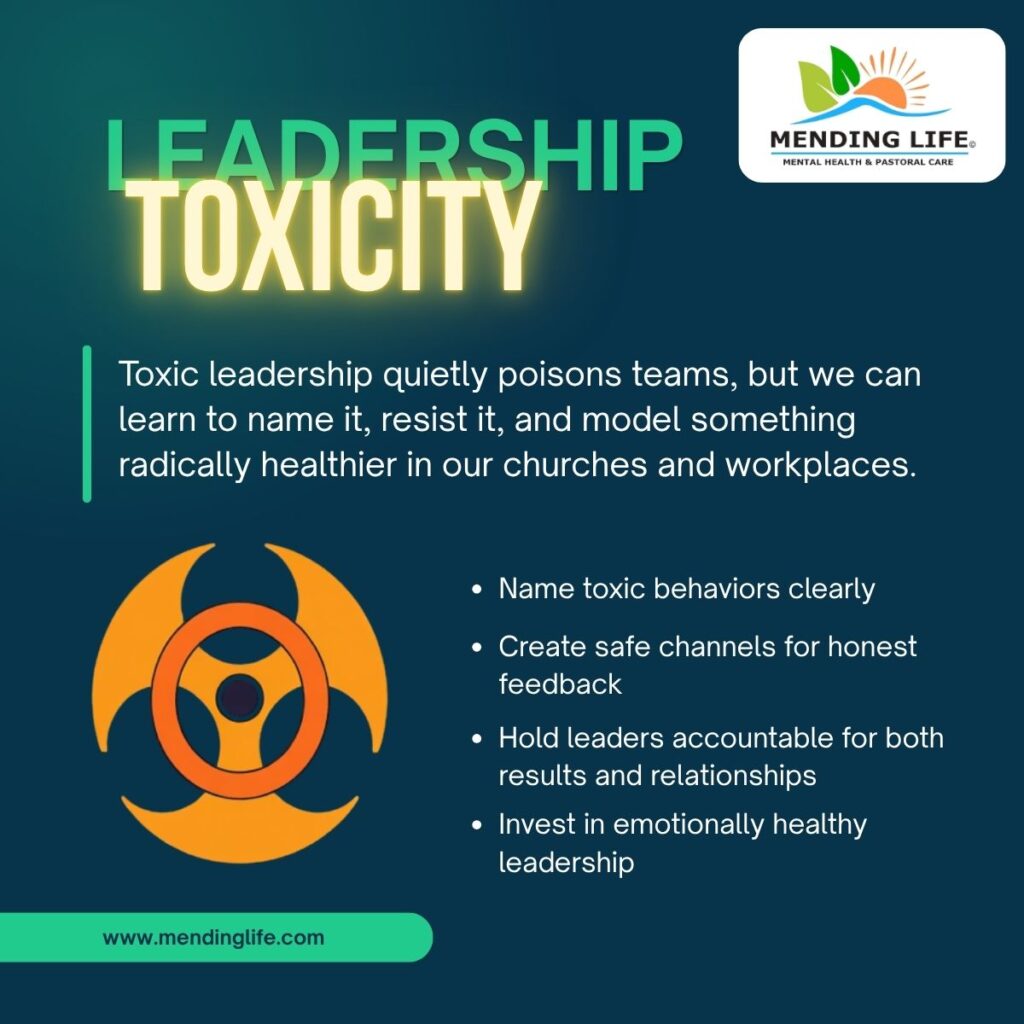
Here are four practices that help push back against toxicity:
1. Name toxic behaviors clearly.
Learn to recognize patterns like bullying, public shaming, gaslighting, favoritism, and chronic blame‑shifting. Define what is unacceptable in your culture so people are not left guessing.
2. Create safe channels for honest feedback.
Healthy teams make it normal—not risky—to speak up about concerns. Anonymous feedback tools, open‑door policies, and regular check‑ins can surface issues early, before people are deeply harmed.
3. Hold leaders accountable for both results and relationships.
It is not enough for leaders to “get things done” if they consistently damage people along the way. Performance reviews, coaching, and clear consequences for harmful behavior communicate that how we lead matters as much as what we achieve.
4. Invest in emotionally healthy leadership.
Training in emotional intelligence, empathy, and conflict resolution helps leaders develop self‑awareness instead of leading from reactivity or insecurity. Communities thrive when leaders are willing to do their own inner work, receive feedback, and repent when they miss the mark.
References
Wolor, C. W., Ardiansyah, A., Rofaida, R., Nurkhin, A., & Rababah, M. A.Impact of toxic leadership on employee performance. Health Psychology Research, 10(4), 57551. https://10.52965/001c.57551